
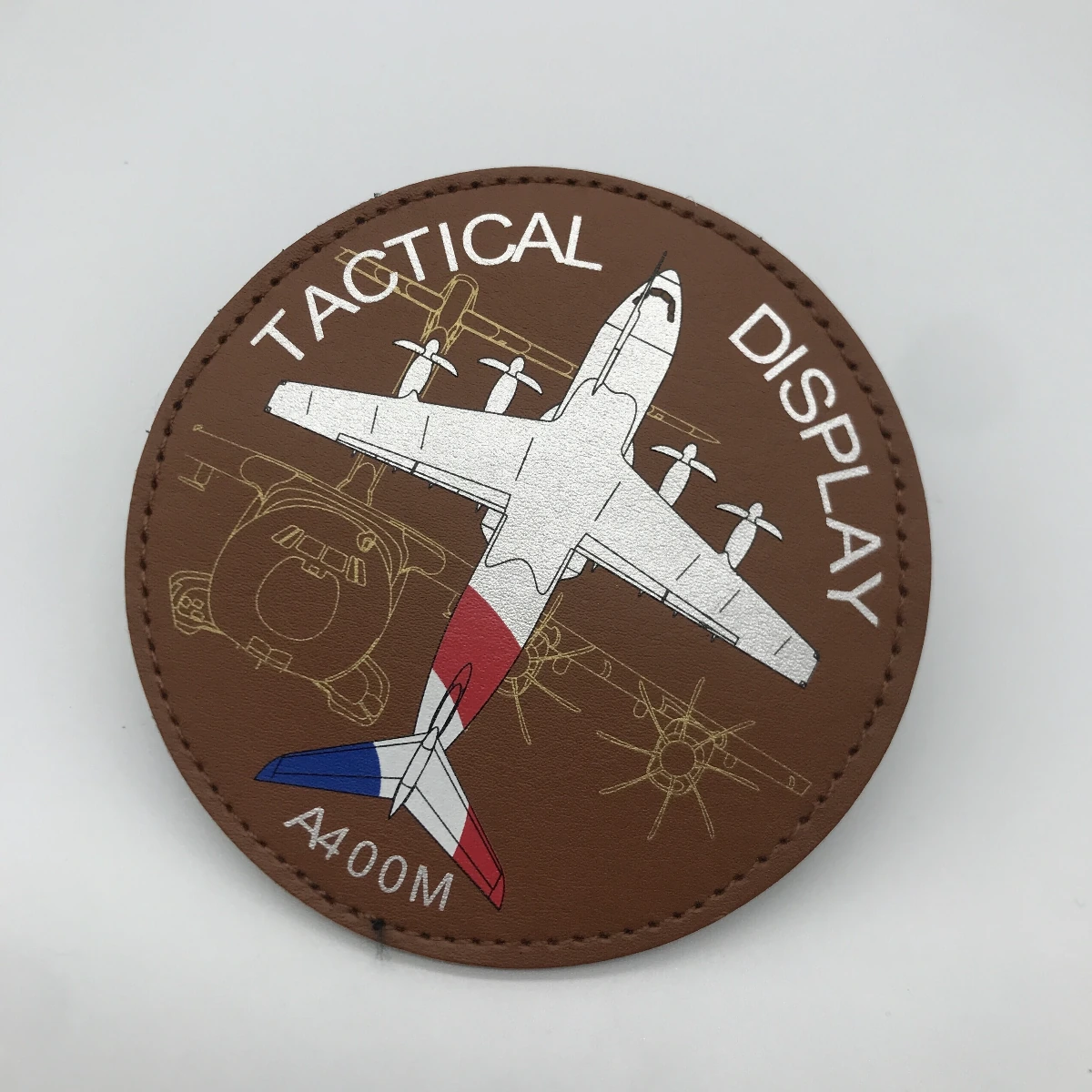
Leather and leatherette patch production
Custom Leather Patches
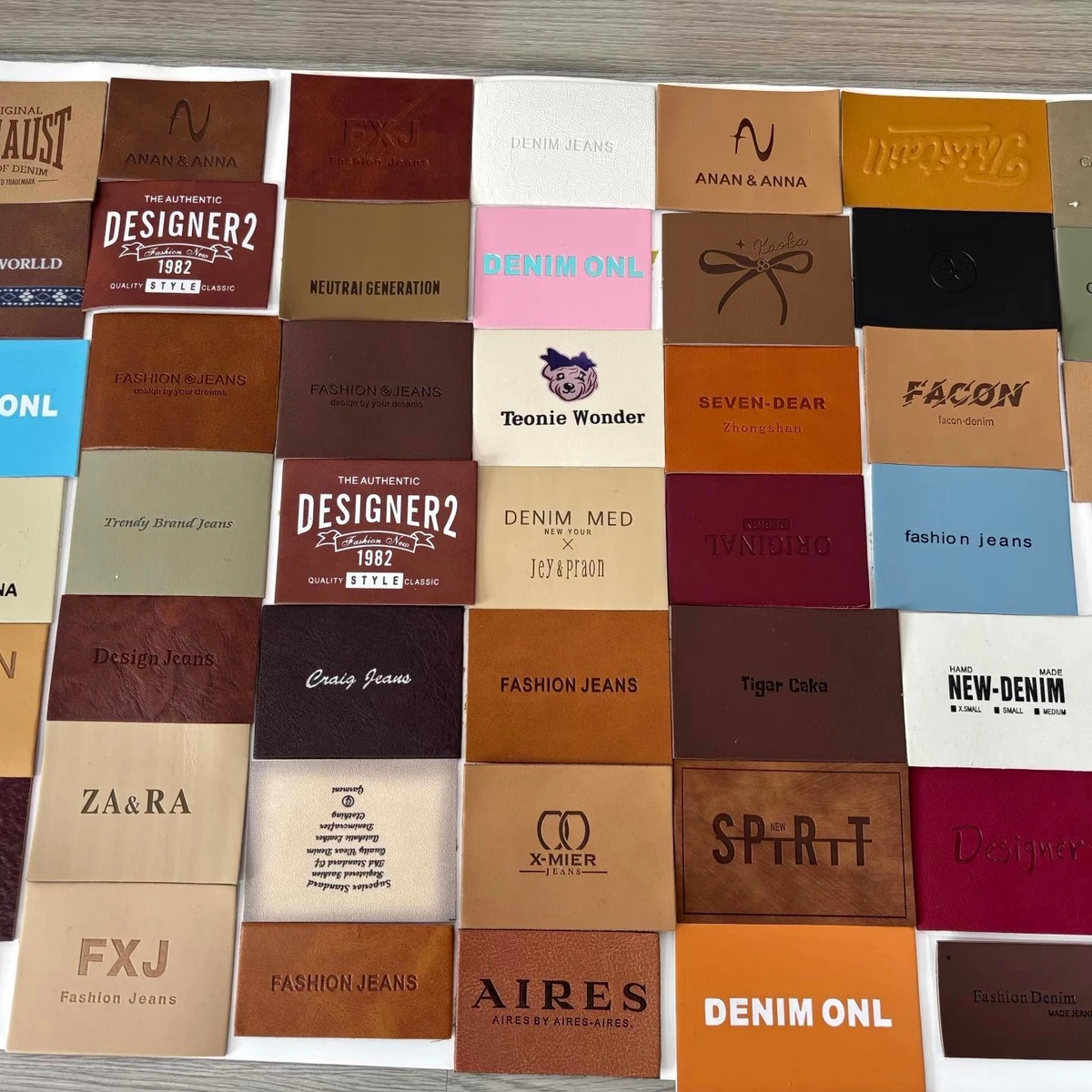
Custom leather patches use a genuine-leather, faux-leather, or leatherette face with an approved marking method. Material, finished size, logo definition, surface color, edge treatment, and backing are reviewed together so the quote and electronic proof describe one repeatable B2B product specification.
200
pcs MOQ
for custom leather patch orders
Leather Patches Custom-Made with Laser Engraving, UV Printing and Debossing / Embossing
Leather patches custom made for a brand program depend on the relationship between the face material and the marking method. Artwork must be translated into embossing, debossing, engraving, printing, or stitching instructions that preserve recognizable shapes, readable wording, and a controlled perimeter at the approved finished size.

Laser Engraved
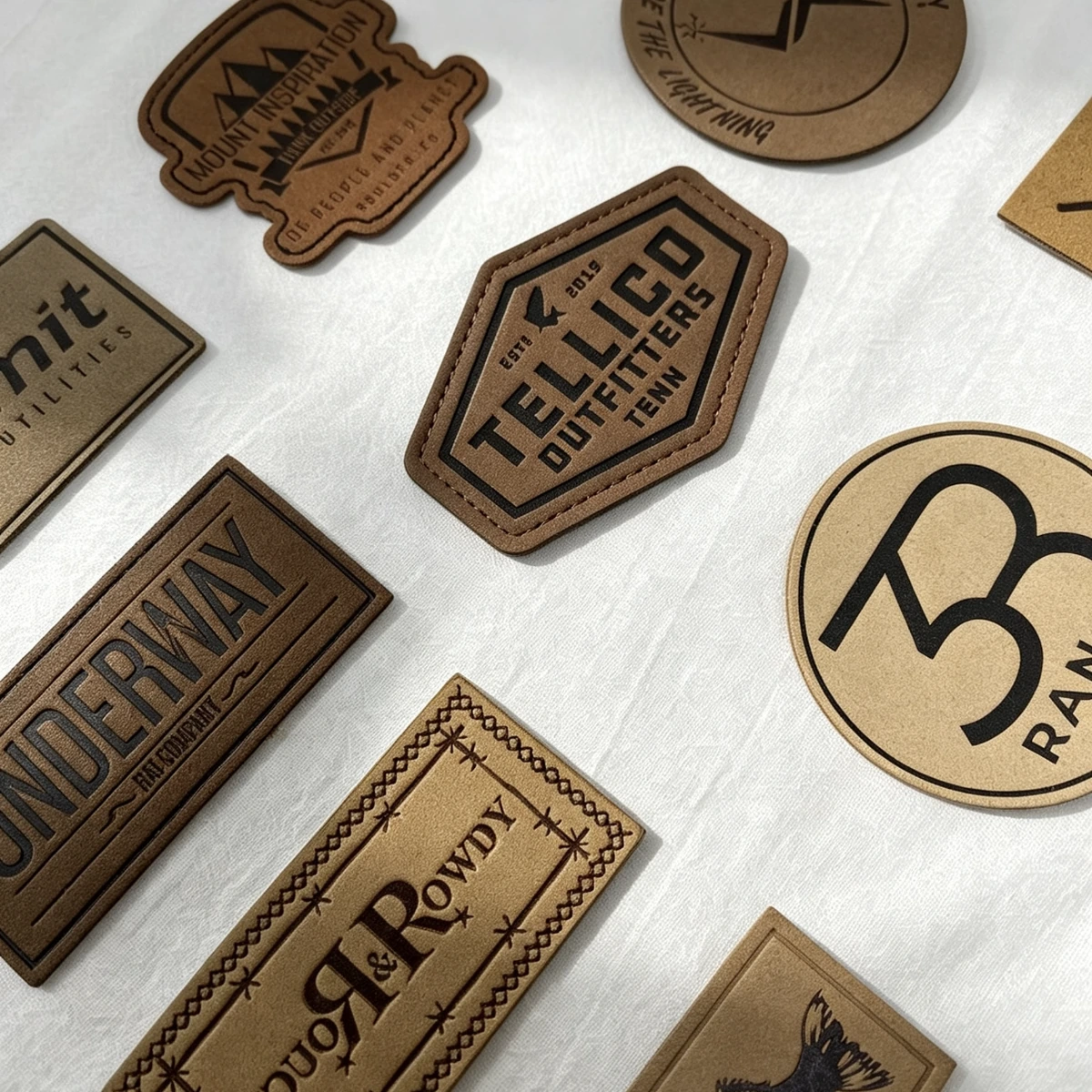
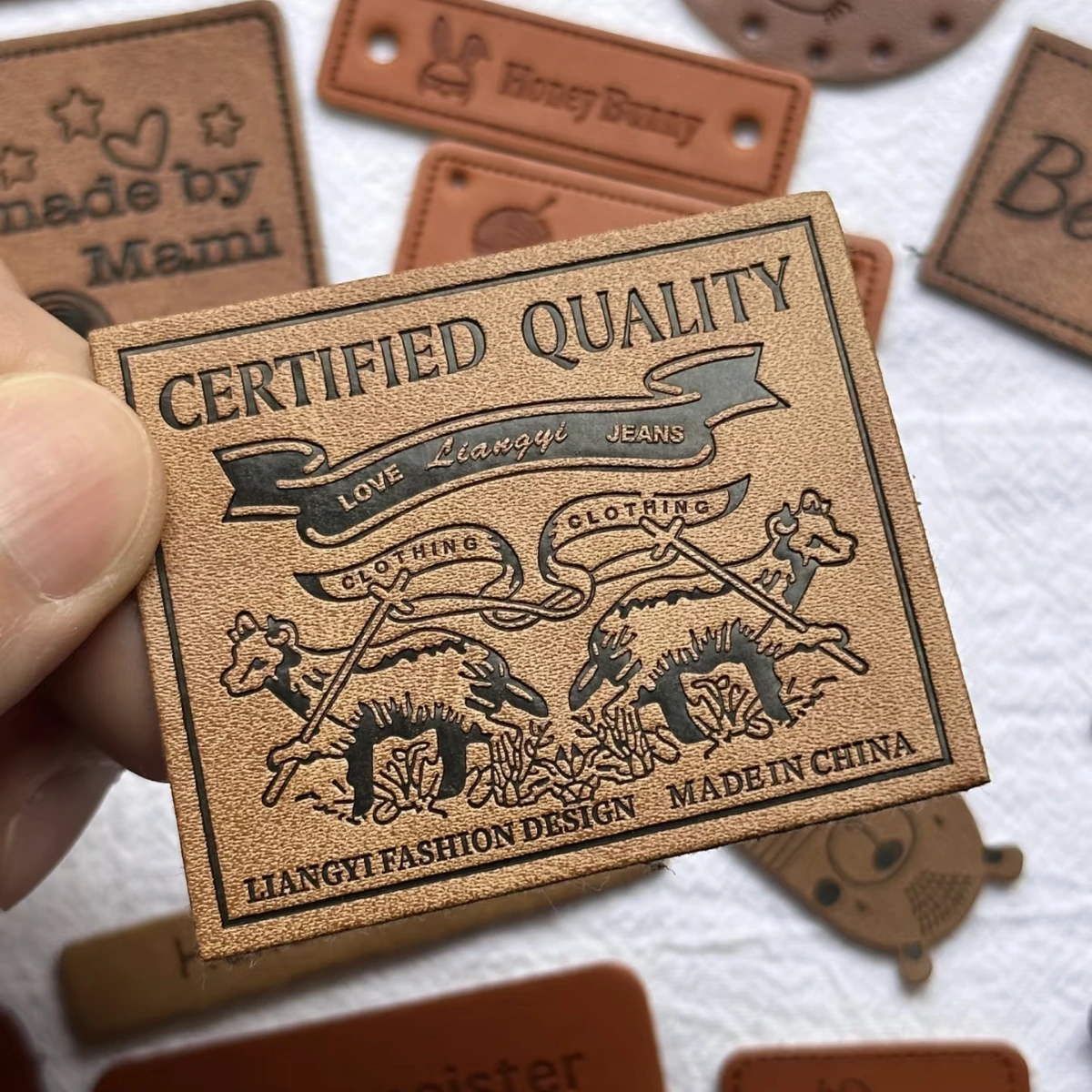
Laser engraved leather patches create a clean, precise design by burning the artwork directly into the leather surface. This style is great for logos, text, line art, and detailed designs that need a classic branded leather look.

UV Printed
UV printed leather patches allow full-color artwork to be printed onto the leather surface. This option works well for colorful logos, gradients, detailed branding, and designs that need more visual contrast than engraving alone.

Debossed / Embossed
Debossed and embossed leather patches use pressure to press artwork into or raise it from the leather. This creates a premium dimensional finish that is ideal for simple logos, badges, labels, and high-end branded apparel.
Border and Backing Options
A custom leather patch specification must connect the artwork to the selected face material and marking method. Finished size, shape, material, surface color, mark treatment, perimeter, and backing are reviewed together before the electronic proof is approved.
Border finishes

Without Outline
A leather patch without an additional debossed outline around the outer edge. Keep essential artwork clear of the cut edge and the intended attachment path.

With Debossed Outline
A pressed outline frames the artwork near the outer edge of the leather patch. Confirm the outline position and its clearance from the cut edge and attachment path.
Backing options

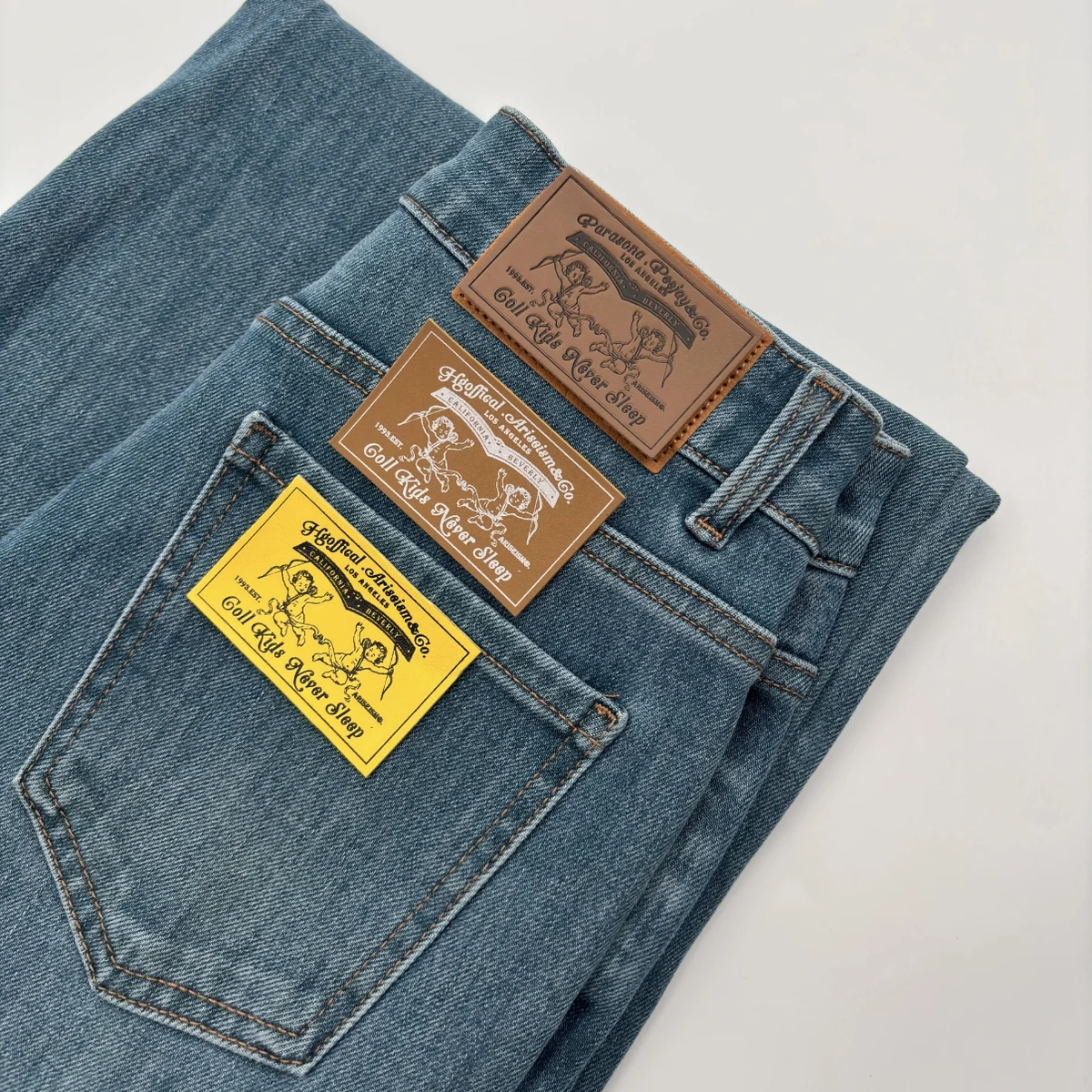
Sew-on
Best when the leather patch will be permanently sewn to the garment or product and the attachment stitch can be planned around the cut or stitched perimeter.
The attachment path is kept outside essential lettering, impressed detail, and the approved perimeter.

Iron-on
A heat-activated layer for compatible leather constructions and fabrics when the application equipment and finished item can support the required bonding conditions.
Patch material, garment finish, heat sensitivity, and the final application method must be confirmed together.

Hook-and-loop
A removable system for apparel, bags, uniforms, and equipment that already use a compatible loop surface.
The backing stack, perimeter, and material flexibility are checked so the patch remains even after assembly.

Adhesive
An adhesive layer can support positioning or suitable temporary applications where permanent sewing is not required.
Confirm the substrate, surface finish, wear conditions, and required service life before choosing adhesive as the attachment method.
LEATHER-SPECIFIC PRODUCTION
How Custom Leather Patches Are Made
- Review artwork at finished size and intended application
- Confirm genuine leather, faux leather, or leatherette construction
- Prepare the embossing, debossing, engraving, print, or stitch artwork
- Confirm dimensions, surface color, mark treatment, edge, and electronic proof
- Produce the approved mark on the specified material face
- Cut and finish the approved perimeter
- Apply and align the specified backing
The approved leather specification controls material, surface color, mark method, mark placement, dimensions, perimeter, and backing. Production follows that approved specification; general company and packing controls remain owned by the About page.
LEATHER-SPECIFIC QUALITY CHECKS
What We Check on Custom Leather Patches
- Finished dimensions, shape, and cut-path alignment
- Material face, surface color, grain, and finish consistency
- Logo definition, letter counters, line clarity, and mark depth
- Registration between printed, impressed, engraved, or stitched artwork areas
- Surface marks, warping, unintended discoloration, and material defects
- Cut-edge, corner, hole, and stitched-perimeter consistency
- Backing position and attachment where included
- Letter counters and open spaces remain visible
- Fine engraved, debossed, printed, or stitched lines remain distinct
- Mark depth, fill, or stitch placement stays inside the intended shapes
- Surface tone and contrast separate adjoining artwork regions
- Perimeter and cut paths preserve the approved outline
These checks are specific to leather construction: they verify that the approved material and marking route produce the intended logo definition, surface appearance, perimeter, and backing alignment.
Applications
Leather Patches Custom-Made for Clothing and Accessories
From apparel and headwear to bags and outerwear, these are common routes for custom leather patch programs. Each linked page provides deeper guidance for that application.
Clothing
Label-like branding for garment collections, with material thickness and surface finish matched to the fabric.
Hats & caps
Compact headwear labels, with logo contrast and letter spacing checked at the finished size.
Jackets
Outerwear labels with cut-edge clearance and the attachment path kept outside the main artwork.
Uniforms
Identification labels for uniform programs, with readable wording and a specified attachment method.
Motorcycle clubs
Club marks for jackets and vests, with the leather face, perimeter and sewing path specified together.
Back patches
Larger back placements, with material thickness and flexibility evaluated against the finished garment.
Lettering patches
Names and lettering, with open counters and sufficient contrast for the selected marking method.
Vest patches
Chest, side and back labels, with edge clearance planned around the intended sewn placement.
Who Are Custom Leather Patches For?
Custom leather patches suit B2B buyers who need a compact label-like surface, controlled logo treatment, and repeatable material, size, perimeter, and backing specifications.

Apparel brands and merch teams
For clothing collections that need leather or leather-look trims, controlled logo marks, and coordinated repeat runs.

Uniform suppliers and organizations
For readable identification, coordinated material or color variants, and specifications that can be reviewed before batch production.

Hat and accessory programs
For compact branding on caps, bags, and accessories where a leather-look label and controlled attachment are required.

Military and public-service buyers
For identification artwork that needs clear separation between compact lines, wording, surface tone, and perimeter treatment.

Clubs and member groups
For marks that combine names, dates, symbols, and custom contours in one leather or leatherette piece.

Distributors and repeat-order buyers
For B2B programs that need approved artwork, material, dimensions, surface color, mark method, edge, and backing recorded as one order specification.

Schools and alumni programs
For crests, dates, names, and repeat merchandise that must retain consistent material and marking specifications across several releases.
Workwear and uniform distributors
For label-style identification patches that need controlled dimensions, wording, material, and reorder specifications.

Events and promotional programs
For campaign marks, event dates, and sponsor details that benefit from embossed, debossed, engraved, printed, or stitched leather-look branding.
How it works
Ordering Custom Patches Is as Easy as 1–2–3
Share your design, approve the details, and we will bring your patches to life.
1
Send Us Your Design
Send your logo, sketch or reference to your custom patch maker, together with the size, quantity and intended use. We will review the details and prepare your quote.
2
Approve Your Digital Proof
Review the digital artwork and order specifications. Production follows your approval; any physical sample requirements are agreed before the batch begins.
3
Receive Your Custom Patches
We manufacture and check your approved order, then arrange shipment to your confirmed destination.
Use the custom form or contact us
How to Order Custom Leather Patches
Submit the exact project requirements so the quote and electronic proof are based on the patch you actually need.
Choose the material, actual size and quantity, marking method, edge, and backing, then upload your artwork for a leather patch quote and electronic proof. MOQ 200 pcs.
For a useful leather review: send the finished dimensions, original artwork, smallest required wording, preferred material, marking method, edge treatment, backing, and intended garment or product. Those inputs determine how the patch specification should be engineered.
Choose custom leather patches
Confirm that leather or leatherette is the product direction for your artwork and application.
Confirm genuine leather, faux leather, or leatherette together with the surface finish and precision-cut or stitched perimeter required by the outline.
Material thickness, grain, coating, flexibility, and finish affect cutting, mark definition, edge behavior, and how the patch sits on the finished item. The selected material must match both the artwork and application.
Provide size and quantity
Enter the finished dimensions and required order quantity. The minimum order is 200 pcs.
Set the actual width and height first; lettering, line width, mark depth, corner radius, and cut-edge clearance are evaluated at that finished scale.
Quantity is confirmed with the size and construction so your quote reflects the actual batch specification.
Reducing artwork changes line width, letter spacing, mark depth, and the clearance available around the cut edge. Secondary detail is simplified instead of scaling a large logo blindly and assuming the same definition will remain on a small leather patch.
Confirm border and backing
Choose the intended perimeter treatment and attachment method for the finished product.
Confirm sew-on, heat-seal, hook-and-loop, or adhesive backing against the leather construction, garment material, placement, expected removability, and application method.
Upload artwork
Send your logo, lettering, emblem, or reference artwork together with material and color notes.
Letter counters, spacing, and stroke width are checked at final size. If engraving, debossing, embossing, print, or stitching would soften an opening, the typeface, tracking, wording, or scale must be adjusted before the proof is approved.
Fine marks behave differently on smooth faux leather, coated leatherette, and natural grain. Narrow strokes can lose contrast or merge into the surface texture, so essential lines and negative spaces are opened for the chosen material and marking route.
Receive a quote and proof
We review the requirements and provide a quote plus an electronic proof for confirmation.
Review the artwork at the actual patch dimensions and on the selected material. Grain, surface coating, mark depth, tonal contrast, cut clearance, and attachment method—not an enlarged screen preview—determine whether the finished leather patch remains clear. Use consistent leather terminology when specifying genuine leather and related materials.
Approve the specification
Check the material, size, surface color, mark treatment, outline, backing, and artwork details before approving production.
Map the face color and each visible mark to an approved reference. Confirm whether the logo will be embossed, debossed, engraved, printed, or stitched and whether the result is tonal or contrasted.
Natural grain, coatings, and surface color change how an engraved, debossed, embossed, printed, or stitched mark is perceived. Tone-on-tone branding can be subtle, while filled or printed details provide stronger contrast; the proof must identify the intended result.
Production
The approved leather specification moves into batch production and product-specific checks.
Artwork detail
The marking method converts each artwork shape into a physical impression, engraved line, printed area, or stitched feature. Small lettering needs enough stroke width and spacing for the selected material, while larger marks can carry deeper relief or stronger tonal contrast.
Natural grain and coated surfaces resolve detail differently, while heat, pressure, engraving, ink, and stitching create different edge behavior. Because material, mark method, line width, and finish interact, artwork is reviewed at final size instead of being forced through one universal minimum-detail rule.
Delivery
Shipping details are confirmed with the order so the completed batch can be sent to the destination provided.

Factory-direct B2B support
Why choose PatchCraftPro?
Factory-direct pricing, without layered outsourcing
We are a patch factory, not a middleman adding markups after passing the order through multiple subcontractors. Product options are quoted at factory-direct pricing.
See the design first, then pay after approval
We do not collect payment before you confirm the design effect. If the design or sample result is not satisfactory, you can request unlimited free revisions before production begins.
Every patch checked, plus 5–10% extra quantity
Every patch is inspected before shipment with a 100% quality guarantee. We also include approximately 5–10% extra patches at no charge—for example, a 200-piece order ships with about 210 pieces—to protect both usable quality and delivered quantity.
Built for B2B batch production and technical support
As a direct patch manufacturer, our factory operates more than ten imported Barudan and Tajima machines configured for B2B batch production, supported by a professional technical team. Global air-express shipping is free, carries no import duties, and normally arrives in 5–15 days instead of the 20+ days commonly required by sea freight.
Featured brand work
Made to higher standards for brands
Using the same factory network and production standards as Evisu, adidas and Champion.
REAL BRAND PRODUCTION PHOTO
Evisu · Streetwear · Brand launches
Made for streetwear drops and repeat collections
REAL BRAND PRODUCTION PHOTO
adidas · Clubs · Sports programs
Built for clubs—and worn far beyond the field
REAL BRAND PRODUCTION PHOTO
Champion · Apparel · Retail programs
Consistent embroidered identity across repeat releases


Selected brand work
Explore Our Precision Embroidery & Patch Work for Premium Fashion Brands
A closer look at detailed stitching, layered textures and expressive garment embroidery.


Quick product decision
Custom Leather Patches, Embroidered, Printed, or PVC?
Use this as a first-pass decision guide. Final selection should still be based on the artwork, finished size, application, and required surface.
| Decision point | Leather | Embroidered | Printed | PVC |
|---|---|---|---|---|
| Surface | Leather or leather-look face | Raised visible stitching | Smooth printed face | Molded flexible surface |
| Strong fit | Label-like branding, tonal or contrasted marks | Bold emblems and stitch texture | Photos, gradients, continuous color | 2D or 3D molded detail |
| Key tradeoff | Fine detail depends on material and marking method | Less suitable for very fine artwork | No leather grain or impressed relief | Not a textile or leather surface |
| Comparison guide | Current page | Leather vs Embroidered Patches | Leather vs Printed Patches | Leather vs PVC Patches |
Choose leather when a compact label-like face, natural or leather-look surface, and embossed, debossed, engraved, printed, or stitched branding suit the product. Choose embroidery for visible stitch texture, woven for finer textile detail, printed for photographs or gradients, and PVC for molded relief.
Other product constructions
Other Custom Patch Products
If leather is not the final technical choice, compare a stitched textile surface, finer woven construction, molded PVC, or full-color printed format.

Woven Patches
Choose a flatter textile surface for compact lettering and finer linework.

Chenille Patches
Choose a thick varsity-style texture for bold letters and shapes.

Name Patches
Choose a dedicated product format for names, identifiers, and uniform labeling.

Leather patch FAQ
Questions about custom leather patches
What is the difference between genuine leather, faux leather, and leatherette patches?
Genuine leather is an animal-derived material with natural variation. Faux leather and leatherette use non-leather constructions that can provide a more uniform face. The quote and proof should identify the selected material rather than using the terms interchangeably.
Can leather patches reproduce small text?
Small text is possible when the finished size, typeface, stroke width, spacing, material surface, and marking method keep the letterforms open. We review the submitted artwork rather than promise one universal minimum size.
Can I order a custom shape?
Yes. Regular shapes and custom outlines can be planned. The cut edge, corner radius, narrow projections, and any attachment holes must form a perimeter that can be produced cleanly at the approved size.
Which edge finish is used for leather patches?
Leather and leatherette patches commonly use a precision-cut perimeter, while compatible constructions may include stitched edge detail. The correct option is confirmed with the material, artwork, finished size, and attachment plan.
Which backing options are available?
Common options include sew-on, iron-on, hook-and-loop, and adhesive backing. The patch material, garment substrate, placement, and intended use should be reviewed before the backing is finalized.
What is the minimum order quantity?
The MOQ for custom leather patches is 200 pcs. Provide the material, size, quantity, artwork, marking method, edge, and backing requirements so the quote reflects the actual specification.
What artwork should I upload?
Vector artwork is helpful, but you can also send a clear logo, emblem, lettering layout, or high-resolution reference. Include exact wording, intended size, material preference, and color references where available.
Do you provide a proof before production?
Yes. An electronic proof is provided so the artwork, material direction, dimensions, outline, surface color, mark treatment, and other visible specifications can be reviewed before batch production begins.