


Molded 2D and 3D PVC patch production
Custom PVC Patches
Custom PVC patches translate artwork into flexible molded color zones and planned relief instead of thread or woven yarn. Finished size, 2D or 3D height changes, boundary walls, negative space, perimeter, and backing are reviewed together before the mold layout and electronic proof are approved.
200
pcs MOQ
for custom PVC patch orders
Ways to Make Custom PVC Patches
Choose the PVC appearance first, then specify 2D or 3D relief and the backing. Each design is planned as molded shapes and separate color zones.

Classic PVC Patches
Solid-color PVC forms logos and lettering in raised and recessed areas. Defined color boundaries keep the design readable, while the mold controls the shape, thickness and surface relief.
Glow-in-the-Dark PVC Patches
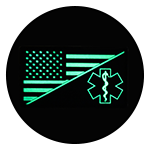
Selected areas use a glow effect that becomes visible in darkness after exposure to light. Specify which parts should glow and review both their daylight appearance and the charged effect.

Transparent PVC Patches
A clear or translucent body allows the surface behind the patch to remain visible. Plan the logo contrast, body tint and backing together, since the backing can affect the transparent appearance.
2D / 3D and Backing Options
Choose flat-topped molded levels or sculpted contours, then match the backing to the PVC body and the attachment surface.
2D / 3D relief

2D PVC Patches
Flat-topped raised and recessed levels create crisp steps between logos, lettering and color zones. 2D still has thickness and relief; it does not mean a printed flat image. Keep narrow letters and color boundaries wide enough for the mold.

3D PVC Patches
Rounded or sloped molded surfaces give the design sculpted depth. Use these contours for modeled shapes, while keeping critical lettering on flatter local areas so its edges remain readable.
Backing options

Sew-on
A molded perimeter channel provides a path for stitching. Keep the channel clear of lettering and thin edge projections.

Iron-on
Heat-activated backing requires a compatible PVC construction and application surface. Confirm heat tolerance and bonding conditions before production.

Hook-and-loop
A removable backing for a compatible loop surface. Match the hook footprint to the molded contour without overhang.

Adhesive
An adhesive layer can support positioning or suitable light-duty use. Confirm the surface and expected wear before choosing it.
PVC-specific production
How Customized PVC Patches Are Made
- Translate approved artwork into a moldable relief map
- Define 2D levels or sculpted 3D contours
- Separate colors into wells, ridges, and base regions
- Confirm dimensions, relief, colors, contour, backing, and proof
- Prepare the mold or tooling from the approved layout
- Form the colored PVC regions and complete the molded body
- Demold, trim, apply the specified backing, and inspect
The PVC production layout controls how relief heights, color wells, boundary ridges, base areas, and the outer body reproduce the approved artwork. It is distinct from the general factory and packing controls owned by the About page.
PVC-specific quality checks
What We Check on Custom PVC Patches
- Finished dimensions, body profile, and outer contour
- Molded color appearance and clean color boundaries
- Letter counters, narrow ridges, and recessed openings
- Registration and separation at adjoining color zones
- 2D step definition or 3D contour continuity
- Surface consistency, incomplete fills, voids, and excess flash
- Edge trimming, flatness, and backing alignment
These checks are specific to molded PVC construction: they verify that relief remains legible, color zones stay separated, the surface and perimeter are clean, the body sits as intended, and the backing aligns with the approved contour.
Applications
PVC Patches Custom-Made for Clothing and Gear
From apparel and bags to uniforms and field equipment, these are common routes for custom PVC patch programs when a flexible molded surface, clear color zones, or removable attachment is required. Choose an application below to request a quote for your PVC design.
Military
Unit emblems with stepped or sculpted relief, keeping compact symbols and recessed fields distinct.
Police & security
Identification emblems with readable agency lettering and a molded outline that supports the backing footprint.
Tactical gear
Molded identifiers for equipment panels, with low-profile relief and a hook backing sized to fit the available loop area.
Morale patches
Bold symbols and short slogans in raised PVC, with separated color zones and removable backing for gear panels.
Airsoft
Team identifiers for airsoft uniforms and gear, with distinct molded lettering and hook-and-loop attachment for changing loadouts.
Uniforms
Names and insignia with distinct molded letters, defined color boundaries and a backing suited to uniform use.
Hats & caps
Compact cap emblems with relief kept low enough for the placement and small lettering separated by moldable gaps.
Motorcycle clubs
Club emblems with raised lettering and clear relief changes, with the attachment path outside the artwork.
Who Are Custom PVC Patches For?
PVC patches suit buyers who need a flexible molded emblem with defined color zones, planned relief, custom contours, and repeatable specifications across a B2B program.

Apparel brands and merch teams
For clothing and merchandise collections that need tactile molded branding, custom contours, and coordinated repeat runs.

Uniform suppliers and organizations
For readable identification, removable backing options, and relief and color specifications that can be reviewed before batch production.

Hat and accessory programs
For molded branding on caps, bags, and accessories where flexible relief and a non-fraying face are preferred.

Military and public-service buyers
For insignia and identification artwork that needs defined molded color zones, durable edges, and optional hook-and-loop attachment.

Clubs and member groups
For emblems that combine names, dates, symbols, and custom contours in one molded flexible piece.

Distributors and repeat-order buyers
For B2B programs that need approved artwork, dimensions, relief levels, colors, contour, and backing recorded as one order specification.

Schools and alumni programs
For mascots, crests, and repeat merchandise that need consistent molded color zones and contour across several releases.
Workwear and uniform distributors
For identification patches that need controlled dimensions, molded relief, attachment footprint, and reorder specifications.

Events and promotional programs
For campaign marks, event graphics, and sponsor details that benefit from a colorful molded finish and custom silhouette.
How it works
Ordering Custom Patches Is as Easy as 1–2–3
Share your design, approve the details, and we will bring your patches to life.
1
Send Us Your Design
Send your logo, sketch or reference to your custom patch maker, together with the size, quantity and intended use. We will review the details and prepare your quote.
2
Approve Your Digital Proof
Review the digital artwork and order specifications. Production follows your approval; any physical sample requirements are agreed before the batch begins.
3
Receive Your Custom Patches
We manufacture and check your approved order, then arrange shipment to your confirmed destination.
Use the custom form or contact us
How to Order Custom PVC Patches
Submit the exact project requirements so the quote and electronic proof are based on the patch you actually need.
Specify the Material for Custom Rubber Patches
If your brief calls for custom rubber patches, specify PVC as the material when ordering this molded construction. Confirm that its relief and attachment method suit your artwork and application.
Provide size and quantity
Enter the finished dimensions and required order quantity. The minimum order is 200 pcs.
Confirm relief and backing
Choose the 2D or 3D relief approach, outer contour, and attachment method for the finished product.
Upload artwork
Send your logo, lettering, emblem, or reference artwork together with any color notes.
Receive a quote and proof
We review the requirements and provide a quote plus an electronic proof for confirmation.
Approve the specification
Check the size, colors, outline, backing, and artwork details before approving production.
Production
The approved PVC specification moves into batch production and product-specific checks.
Delivery
Shipping details are confirmed with the order so the completed batch can be sent to the destination provided.

Factory-direct B2B support
Why choose PatchCraftPro?
Factory-direct pricing, without layered outsourcing
We are a patch factory, not a middleman adding markups after passing the order through multiple subcontractors. Product options are quoted at factory-direct pricing.
See the design first, then pay after approval
We do not collect payment before you confirm the design effect. If the design or sample result is not satisfactory, you can request unlimited free revisions before production begins.
Every patch checked, plus 5–10% extra quantity
Every patch is inspected before shipment with a 100% quality guarantee. We also include approximately 5–10% extra patches at no charge—for example, a 200-piece order ships with about 210 pieces—to protect both usable quality and delivered quantity.
Built for B2B batch production and technical support
As a direct patch manufacturer, our factory operates more than ten imported Barudan and Tajima machines configured for B2B batch production, supported by a professional technical team. Global air-express shipping is free, carries no import duties, and normally arrives in 5–15 days instead of the 20+ days commonly required by sea freight.
Featured brand work
Made to higher standards for brands
Using the same factory network and production standards as Evisu, adidas and Champion.
REAL BRAND PRODUCTION PHOTO
Evisu · Streetwear · Brand launches
Made for streetwear drops and repeat collections
REAL BRAND PRODUCTION PHOTO
adidas · Clubs · Sports programs
Built for clubs—and worn far beyond the field
REAL BRAND PRODUCTION PHOTO
Champion · Apparel · Retail programs
Consistent embroidered identity across repeat releases


Selected brand work
Explore Our Precision Embroidery & Patch Work for Premium Fashion Brands
A closer look at detailed stitching, layered textures and expressive garment embroidery.


Quick product decision
Custom PVC Patches, Embroidered, Woven, or Printed?
Use this as a first-pass decision guide. Final selection should still be based on the artwork, finished size, application, and required surface.
| Decision point | PVC | Embroidered | Woven | Printed |
|---|---|---|---|---|
| Surface | Molded flexible surface | Raised visible stitching | Flat woven textile | Smooth printed face |
| Strong fit | 2D or 3D molded relief and defined color zones | Bold emblems and stitch texture | Fine lines, compact lettering, dense logos | Photos, gradients, continuous color |
| Key tradeoff | Not a textile surface; very fine gradients need another method | Less suitable for very fine artwork | Less raised texture than embroidery | No molded, woven, or stitched texture |
| Comparison guide | Current page | Embroidered vs PVC Patches | Woven vs PVC Patches | Printed vs PVC Patches |
Other product constructions
Other Custom Patch Products
If woven is not the final technical choice, compare a different thread texture, molded surface, or specialized product format.

Embroidered Patches
Choose visible stitch texture and a more dimensional textile face.

Chenille Patches
Choose a thick varsity-style texture for bold letters and shapes.

Name Patches
Choose a dedicated product format for names, identifiers, and uniform labeling.

Woven Patches
Choose a flat woven textile face for compact lettering and fine linework.
PVC patch FAQ
Questions about custom PVC patches
What is the difference between custom PVC patches and embroidered patches?
Custom PVC patches are molded from flexible PVC into defined color zones and planned relief. Embroidered patches build the face with visible thread on fabric. PVC is selected when a non-textile surface, molded 2D or 3D depth, custom contour, or wipe-clean face matters; embroidery is selected when stitch texture is the priority.
How small can lettering be on a custom PVC patch?
Small lettering depends on finished size, ridge width, open counters, relief level, spacing, and surrounding molded detail. We review the actual artwork and intended size rather than promise one universal minimum text measurement.
Can customized PVC patches use custom shapes?
Yes. Regular shapes and custom contours can be molded. Very thin projections, tight internal corners, and edge-adjacent detail may need adjustment so the body, relief, trimming, and backing can be produced cleanly.
What is the difference between 2D and 3D PVC relief?
2D PVC uses distinct flatter height levels for crisp logos, text, and color separation. 3D PVC uses rounded or sloped contours for modeled depth. One design can use planned relief selectively, but critical lettering may need flatter local areas.
Which backing options are available?
Common options include a sew-on channel, hook-and-loop, adhesive, or plain back. The attachment footprint, substrate, removability, flex, and intended use should be reviewed before the backing is finalized.
What is the minimum order quantity?
The MOQ for custom PVC patches is 200 pcs. Provide the size, quantity, artwork, 2D or 3D direction, color references, outer contour, and backing so the quote reflects the actual specification.
What artwork should I upload?
Vector artwork is helpful, but you can also send a clear logo, emblem, lettering layout, or high-resolution reference. Include exact wording, intended size, and color references where available.
Do you provide a proof before production?
Yes. An electronic proof is provided so the molded layout, dimensions, relief direction, color zones, outline, and other visible specifications can be reviewed before batch production begins.