Introduction: Securing Your Unit’s Identity
When outfitting a law enforcement department, SWAT team, or military unit, every detail of the uniform matters. Insignias do more than just display a logo; they establish authority, identify specific units like K-9 or Sheriff divisions, and build team cohesion.
However, when procurement officers order new gear, they are inevitably faced with a critical decision regarding application methods. The debate of velcro vs sew on patches is one of the most common questions we receive. In this guide, we will break down the advantages of both methods so you can make the best choice for your personnel.
The Classic Standard: Sew-On Backings for Police Uniform Patches
For decades, the traditional method of applying an emblem to a uniform was direct sewing. A sew-on application means the emblem has a plain fabric backing and is permanently stitched directly into the garment by a tailor.
Pros of Sewing:
Permanent Security: Once stitched, the insignia is incredibly secure. It cannot be accidentally ripped off during physical altercations or strenuous tactical training.
Flush Appearance: Because there is no extra layer of fastening material, the emblem sits completely flush against the fabric. This makes it a highly preferred choice for formal police uniform patches used on Class A dress shirts and traditional hats.
Cons of Sewing:
Lack of Flexibility: If an officer is promoted or transfers units, the stitches must be carefully removed by a tailor, which can damage the underlying fabric over time.
The Modern Tactical Standard: Hook and Loop Backing
In recent years, modern tactical gear has heavily shifted toward a modular approach. Originally invented in the mid-20th century, hook and loop fasteners revolutionized how military personnel attached their gear.
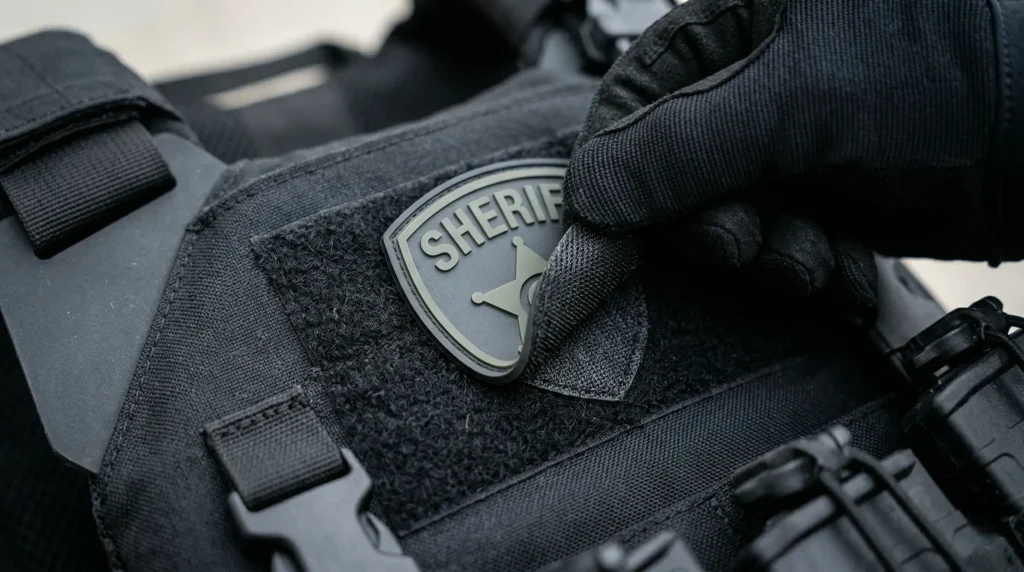
This system uses a “hook” side attached to the back of the emblem and a “loop” side sewn onto the jacket, vest, or backpack. Upgrading your unit to a robust hook and loop backing provides unmatched versatility in the field.
Pros of Hook and Loop:
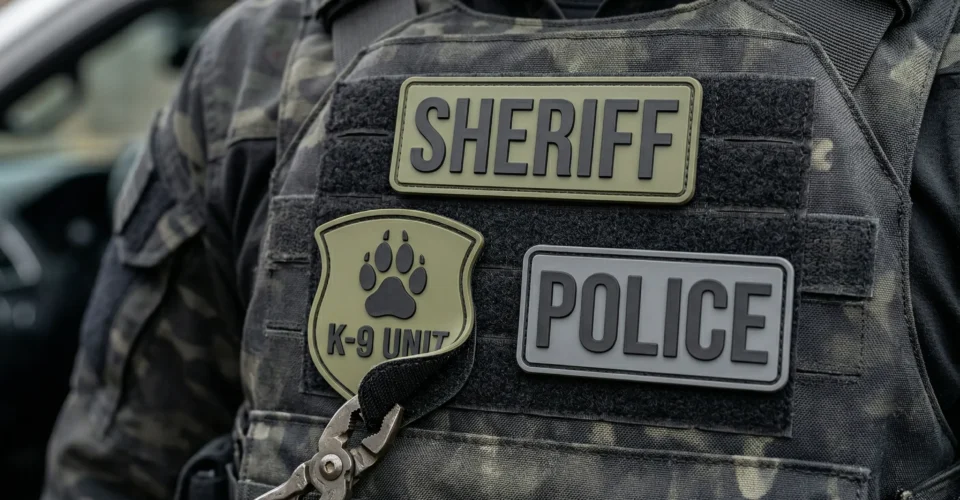
Ultimate Interchangeability: Officers can swap insignias in seconds. A single plate carrier vest can display a “POLICE” identifier during a standard shift and quickly be swapped to a subdued “SWAT” identifier for a specific operation.
Easy Removal for Cleaning: Uniforms can be laundered more aggressively when the heavy insignias are removed prior to washing.